

Low-impact workouts for a healthy lifestyle at any age: A Comprehensive Guide
Share this:

Embark on a journey towards a healthier lifestyle with low-impact workouts suitable for individuals of all ages. This guide offers insights and tips on incorporating these exercises into your daily routine, ensuring a balanced and active life.
Learn about the benefits, types, modifications, and specific health conditions related to low-impact workouts, as well as practical strategies for seamlessly integrating them into your everyday life.
Benefits of Low-Impact Workouts
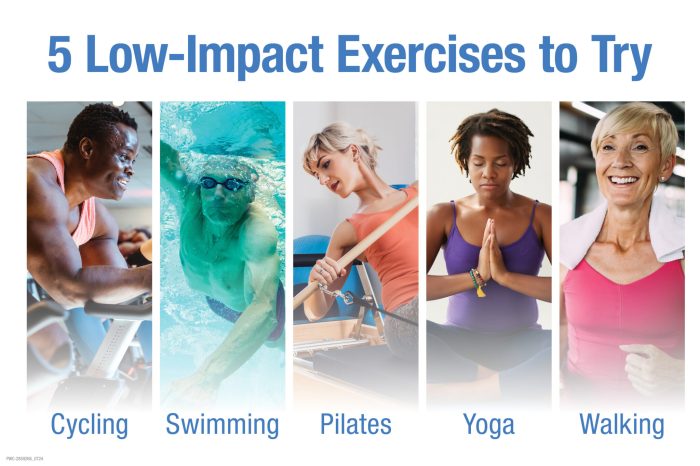
Low-impact workouts offer numerous benefits for overall health and well-being. These exercises are gentle on the joints, making them suitable for individuals of all ages and fitness levels. Incorporating low-impact exercises into your daily routine can help improve cardiovascular health, increase flexibility, build strength, and reduce the risk of injuries.
Examples of Low-Impact Exercises for Different Age Groups
- For Seniors: Walking, swimming, tai chi, and gentle yoga are excellent low-impact options that can help improve balance, coordination, and flexibility.
- For Adults: Cycling, using an elliptical machine, Pilates, or water aerobics are effective low-impact exercises that can help burn calories and strengthen muscles.
- For Kids and Teens: Dancing, trampoline exercises, and low-impact aerobics classes are fun ways for younger age groups to stay active without putting too much strain on their growing bodies.
The Importance of Incorporating Low-Impact Exercises into a Daily Routine
Regularly incorporating low-impact exercises into your daily routine can have long-lasting benefits for your physical and mental health. These exercises can help improve overall fitness, reduce stress, boost mood, and increase energy levels. Additionally, low-impact workouts can be easily modified to accommodate different fitness levels and health conditions, making them accessible to a wide range of individuals looking to maintain a healthy lifestyle.
Types of Low-Impact Workouts
Low-impact workouts encompass a variety of exercises that are gentle on the joints while still providing numerous health benefits. Let's explore different types of low-impact exercises and their unique advantages.
Yoga
- Yoga focuses on flexibility, strength, and relaxation through a series of poses and breathing exercises.
- Benefits include improved balance, reduced stress, and enhanced mental well-being.
Swimming
- Swimming is a full-body workout that is easy on the joints due to the buoyancy of water.
- It helps improve cardiovascular health, build endurance, and increase muscle strength.
Walking
- Walking is a simple and effective low-impact exercise that can be done anywhere, anytime.
- It aids in weight management, boosts mood, and reduces the risk of chronic diseases.
Modifications for Different Age Groups
Low-impact workouts can be modified to suit individuals of all ages, including seniors, children, and those with varying fitness levels. These modifications ensure that everyone can safely and effectively participate in low-impact exercises to improve their overall health and well-being.
Modifications for Seniors
Seniors may need to make adjustments to low-impact workouts to accommodate their specific needs. Some modifications include:
- Reducing the range of motion to prevent strain on joints
- Choosing seated or supported exercises to maintain balance
- Incorporating chair exercises to improve strength and flexibility
- Taking longer rest periods between exercises to prevent fatigue
Adapting Low-Impact Workouts for Children
For children, low-impact workouts can be made more engaging and fun. Some tips for adapting exercises for children include:
- Adding music or games to make workouts more enjoyable
- Focusing on activities that promote coordination and balance
- Including playful movements like animal walks or dance routines
- Keeping sessions short and varied to hold their attention
Tips for Adjusting Low-Impact Exercises Based on Fitness Levels
Individuals with different fitness levels can tailor low-impact workouts to meet their specific needs. Some tips for adjusting exercises based on fitness levels include:
- Increasing or decreasing the intensity of exercises by modifying the speed or resistance
- Using modifications like adding weights or resistance bands to challenge muscles
- Listening to your body and adjusting the workout intensity as needed
- Gradually progressing to more challenging exercises as fitness improves
Low-Impact Workouts for Specific Health Conditions
Regular exercise is essential for overall health, but individuals with specific health conditions may need to approach workouts with caution. Low-impact exercises are particularly beneficial for those with joint problems, chronic conditions like arthritis, or specific cardiovascular health concerns. These workouts can help improve fitness levels without putting excessive strain on the body.
Low-Impact Exercises for Joint Problems
Individuals with joint problems, such as osteoarthritis or previous joint injuries, can benefit from low-impact exercises that are gentle on the joints. Examples of suitable workouts include:
- Swimming or water aerobics
- Cycling on a stationary bike
- Yoga or Pilates
- Walking or brisk walking
Role of Low-Impact Workouts in Managing Arthritis
Low-impact workouts play a crucial role in managing chronic conditions like arthritis by helping to:
- Improve joint flexibility and range of motion
- Strengthen muscles to support the joints
- Reduce pain and inflammation
- Maintain overall fitness levels
Improving Cardiovascular Health with Low-Impact Workouts
For individuals with specific cardiovascular health concerns, low-impact exercises can help improve heart health without overexertion. Examples of beneficial workouts include:
- Elliptical training
- Dancing or Zumba
- Rowing on a machine
- Low-impact aerobics
Incorporating Low-Impact Workouts into Daily Life
When it comes to incorporating low-impact workouts into your daily routine, consistency is key. Here are some strategies to help you stay motivated and make these exercises a regular part of your life.
Importance of Proper Warm-Up and Cool-Down Routines
Before starting any low-impact workout, it's crucial to warm up your muscles to prevent injury. A proper warm-up can include light cardio, dynamic stretches, and mobility exercises. Cooling down after your workout helps reduce muscle soreness and stiffness. Incorporate static stretches and deep breathing to help your body recover.
Creating a Supportive Environment at Home
Setting up a supportive environment at home can make it easier to stick to your low-impact workout routine. Designate a dedicated workout space with minimal distractions. Keep your workout gear easily accessible and create a workout schedule that fits your daily routine.
Consider enlisting a workout buddy or joining virtual workout classes for added motivation and accountability.
Last Point
In conclusion, low-impact workouts provide a gentle yet effective way to improve overall health and well-being, regardless of age. By following the tips and advice Artikeld in this guide, you can embark on a journey towards a healthier and more active lifestyle.
FAQ Corner
Can low-impact workouts help improve joint health?
Yes, low-impact exercises are beneficial for improving joint health as they put less stress on the joints compared to high-impact activities.
Are low-impact workouts suitable for children?
Low-impact exercises can be adapted for children by incorporating fun activities like dancing or gentle stretching routines.
How can I stay motivated to engage in low-impact exercises regularly?
Setting specific goals, varying your workouts, and finding a workout buddy can help you stay motivated to incorporate low-impact exercises into your routine.
Is it necessary to warm up before low-impact workouts?
Yes, warming up is essential before engaging in any physical activity, including low-impact workouts, to prevent injury and prepare your body for exercise.
What are some tips for creating a supportive environment for low-impact workouts at home?
Designating a dedicated workout space, investing in comfortable workout gear, and setting a consistent schedule can help create a supportive environment for low-impact exercises at home.