

How to Fix Minor Auto Hail Damage Yourself Safely: A Comprehensive Guide
Share this:
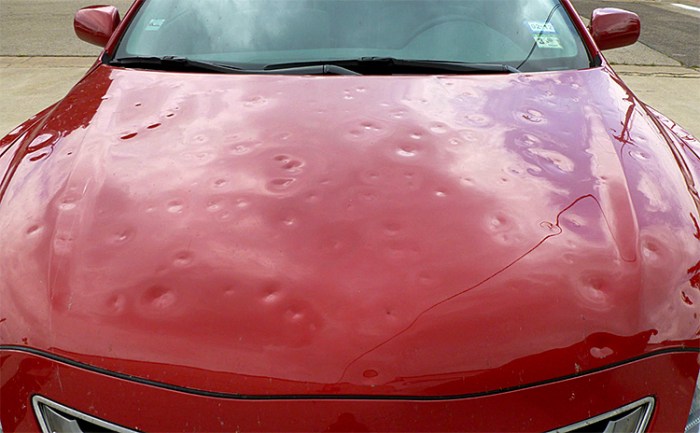
Embark on a journey to discover the art of repairing minor auto hail damage yourself. This guide is designed to equip you with the knowledge and skills needed to tackle this common issue with confidence and safety.
Unveil the secrets of assessing, gathering materials, preparing the work area, repairing the damage, and adding those finishing touches for a flawless result.
Assessing the Damage
When inspecting a vehicle for hail damage, it's essential to do a thorough visual check to identify any signs of damage caused by hailstones. Minor auto hail damage may not always be immediately noticeable, so a detailed examination is crucial to assess the extent of the damage accurately.
Common Signs of Minor Auto Hail Damage
- Dimpled or dented surfaces: Look for small indentations or dents on the vehicle's body panels, roof, hood, and trunk. These can be caused by hailstones hitting the surface.
- Cracked or chipped paint: Check for any paint damage, including cracks or chips, that may have occurred due to the impact of hailstones.
- Scratches or scuffs: Hailstones can leave scratches or scuff marks on the vehicle's surface, indicating damage from the hailstorm.
Areas Where Hail Damage is Typically Found
- Roof: The roof of a vehicle is often a common area where hail damage is prevalent. Inspect the roof carefully for any signs of dents or dimples.
- Hood and trunk: The hood and trunk areas are also susceptible to hail damage. Look for dents, cracks, or paint damage on these surfaces.
- Side panels: Check the side panels of the vehicle for any visible signs of hail damage, such as dents or scratches.
Gathering Materials and Tools
To effectively fix minor auto hail damage yourself, you will need to gather the necessary tools and materials. Having the correct supplies is crucial for a successful repair process, ensuring that you can properly address the damage without causing further issues to your vehicle.
These tools and materials can be easily sourced from various locations, including hardware stores, auto parts shops, and online retailers.
List of Tools and Materials:
- Dent removal tool kit
- Dent puller
- Dent repair hammer
- Glue gun and glue sticks
- Aluminum body filler
- Sandpaper (various grits)
- Microfiber cloths
- Heat gun or hair dryer
- Protective gloves and eyewear
Preparing the Work Area
When preparing to repair hail damage on your vehicle, creating a suitable workspace is essential to ensure a successful outcome. Here are some key steps to follow:
Setting Up Proper Lighting
- Choose a well-lit area to work on your vehicle, preferably a garage or a space with ample natural light. Adequate lighting is crucial for identifying dents and ensuring a precise repair.
- Use additional lighting sources such as work lights or LED lamps to illuminate the damaged areas effectively. Shadows can make it challenging to see imperfections, so good lighting is a must.
- Position the lights strategically to minimize glare and shadows, allowing you to assess the damage accurately and work on the repairs with precision.
Ensuring Safety Measures
- Prioritize safety by wearing protective gear such as gloves, safety goggles, and a mask to shield yourself from potential harm while working on the vehicle.
- Secure the vehicle on a level surface using wheel chocks or brakes to prevent any movement during the repair process. Safety should always come first.
- Avoid working alone, especially when dealing with heavy tools or lifting tasks. Having a helper nearby can provide assistance in case of emergencies.
Repairing Minor Hail Damage
Fixing minor auto hail damage involves gentle techniques to push out dents and reshape the metal using heat and cold methods.
Techniques for Pushing Out Dents
- Start by placing a small block of dry ice on the dent to shrink the metal.
- Use a hairdryer or heat gun to warm the metal around the dent, making it more flexible.
- Gently push on the backside of the dent using a soft mallet or plunger to pop it out.
Using Heat and Cold Methods
- Apply heat to the dented area with a hairdryer or heat gun to make the metal more malleable.
- Use compressed air upside down to quickly cool the heated metal, causing it to contract and pop the dent out.
- Repeat the process of heating and cooling until the dent is completely removed.
Finishing Touches
After repairing minor hail damage on your vehicle, it's essential to focus on the finishing touches to ensure a seamless look and protect the repaired area. This involves techniques like sanding, painting, and polishing to match the vehicle's original color and texture.
Sanding and Painting
Once the repair work is complete, carefully sand the repaired area using fine-grit sandpaper to smooth out any imperfections or rough edges. This step helps create a level surface for painting and blending the new paint with the existing paint on the vehicle.
It's crucial to match the paint color accurately to maintain the overall appearance of the car.
- Use automotive touch-up paint that matches your vehicle's color code for the best results.
- Apply thin layers of paint, allowing each coat to dry completely before adding the next one.
- Blend the new paint with the surrounding area to achieve a uniform finish.
Polishing for a Seamless Look
After painting, polishing the repaired area can help achieve a seamless look and restore the shine of your vehicle's paint. Use a high-quality automotive polish and a soft cloth to gently buff the area, removing any remaining imperfections and enhancing the overall appearance.
- Apply the polish in circular motions, working it into the painted surface.
- Buff the area with a clean cloth to reveal a smooth and glossy finish.
- Regularly waxing your vehicle can help protect the paint and maintain its shine over time.
Outcome Summary
In conclusion, mastering the art of fixing minor auto hail damage yourself can save you time and money while ensuring your vehicle looks as good as new. With the right tools and techniques, you'll be able to tackle this challenge head-on and emerge victorious.
Essential FAQs
Where can I source the tools and materials needed for fixing hail damage?
You can find the necessary tools and materials at your local auto parts store or online retailers specializing in auto body repair supplies.
Is it necessary to match the paint color of my vehicle when repairing hail damage?
Yes, it's important to sand and paint the repaired area to match the original color of your vehicle for a seamless finish.
How can I ensure safety while working on my vehicle to fix hail damage?
Always work in a well-lit area, wear appropriate safety gear, and follow proper techniques to avoid any accidents or injuries.